

Partnership tax return software dashboard on laptop with tax documents on desk
Partnership Tax Return Software Guide

Partnerships face unique tax reporting requirements that differ significantly from sole proprietorships or corporations. Every partnership must file Form 1065 annually, along with Schedule K-1 forms for each partner—a process that becomes exponentially more complex as the partner count grows. Specialized software designed for partnership tax returns streamlines this multi-layered filing process, reducing errors and ensuring compliance with IRS requirements.
What Is Partnership Tax Return Software
Partnership tax return software is a specialized digital tool designed to prepare, calculate, and electronically file Form 1065 (U.S. Return of Partnership Income) with the IRS. Unlike general tax preparation software aimed at individual filers, these platforms handle the unique reporting structure partnerships require: allocating income, deductions, and credits among multiple partners while generating individualized Schedule K-1 forms for each partner.
This software category serves several business structures. General partnerships—where two or more individuals share business ownership—represent the traditional use case. Limited liability companies (LLCs) taxed as partnerships comprise the largest user segment, since most multi-member LLCs default to partnership taxation unless they elect otherwise. Limited liability partnerships (LLPs), common among professional service firms like law practices and accounting groups, also rely on partnership filing software.
The core purpose extends beyond simple form completion. Partnership tax software calculates each partner's distributive share of income, gains, losses, deductions, and credits based on the partnership agreement terms. It tracks basis adjustments, manages guaranteed payments to partners, and handles special allocations that deviate from ownership percentages. For partnerships with international operations, advanced software manages foreign tax credits and information reporting requirements.
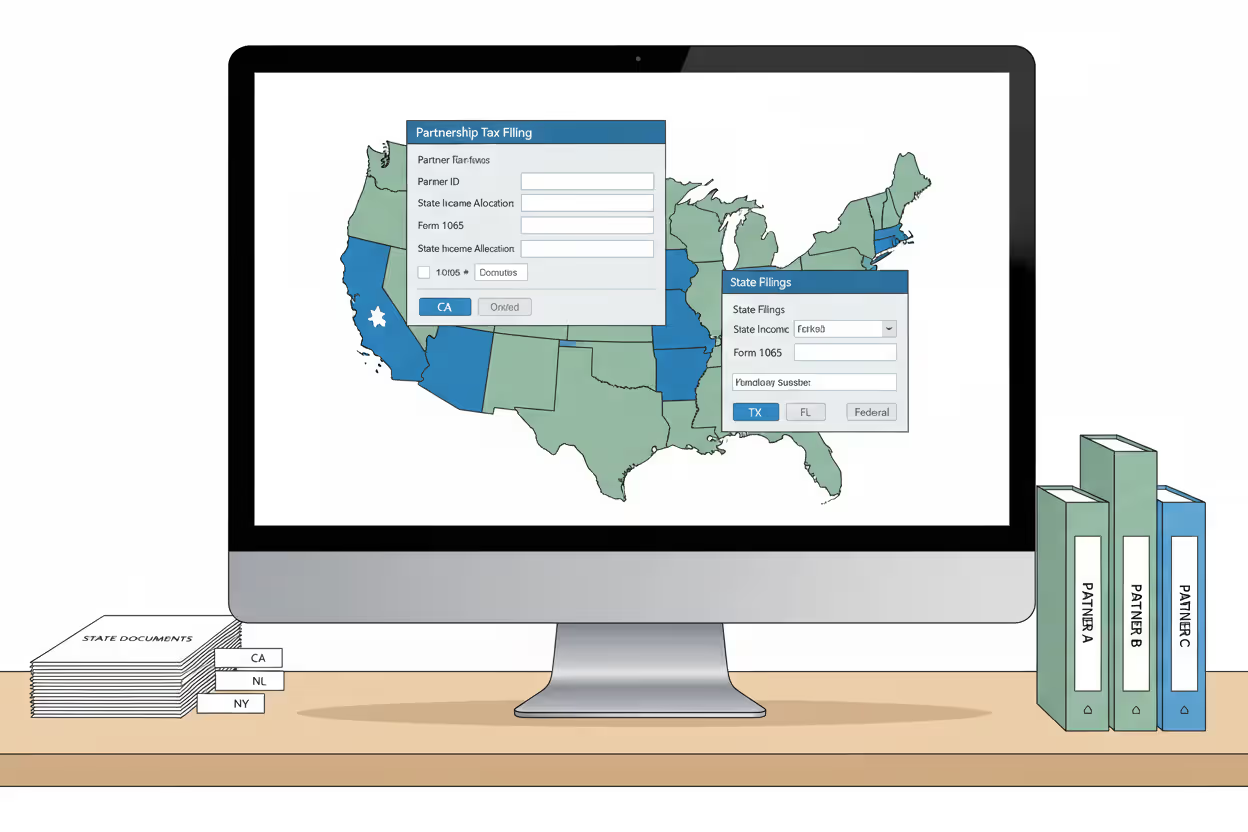
State-level compliance adds another dimension. Partnerships operating across multiple states need software that handles composite returns, withholding requirements for nonresident partners, and state-specific K-1 variations. A partnership with ten partners operating in five states might need to generate sixty separate tax documents—a task that becomes unmanageable without proper software.
Author: Olivia Pembroke;
Source: atiservicesoftampa.com
How Partnership Filing Software Works
The partnership filing process through software follows a structured workflow that mirrors the logical sequence of tax preparation. Data entry begins with basic partnership information: formation date, business activity codes, accounting method, and partner details. Most platforms import financial data directly from accounting systems, eliminating manual entry of income statement and balance sheet items.
Once financial data loads, the software applies partnership tax rules to calculate each partner's share. This allocation process considers ownership percentages, special allocations documented in the partnership agreement, and timing of partner contributions or withdrawals during the year. The system tracks each partner's capital account using either tax basis, GAAP, or Section 704(b) methods—critical for determining gain or loss on future distributions.
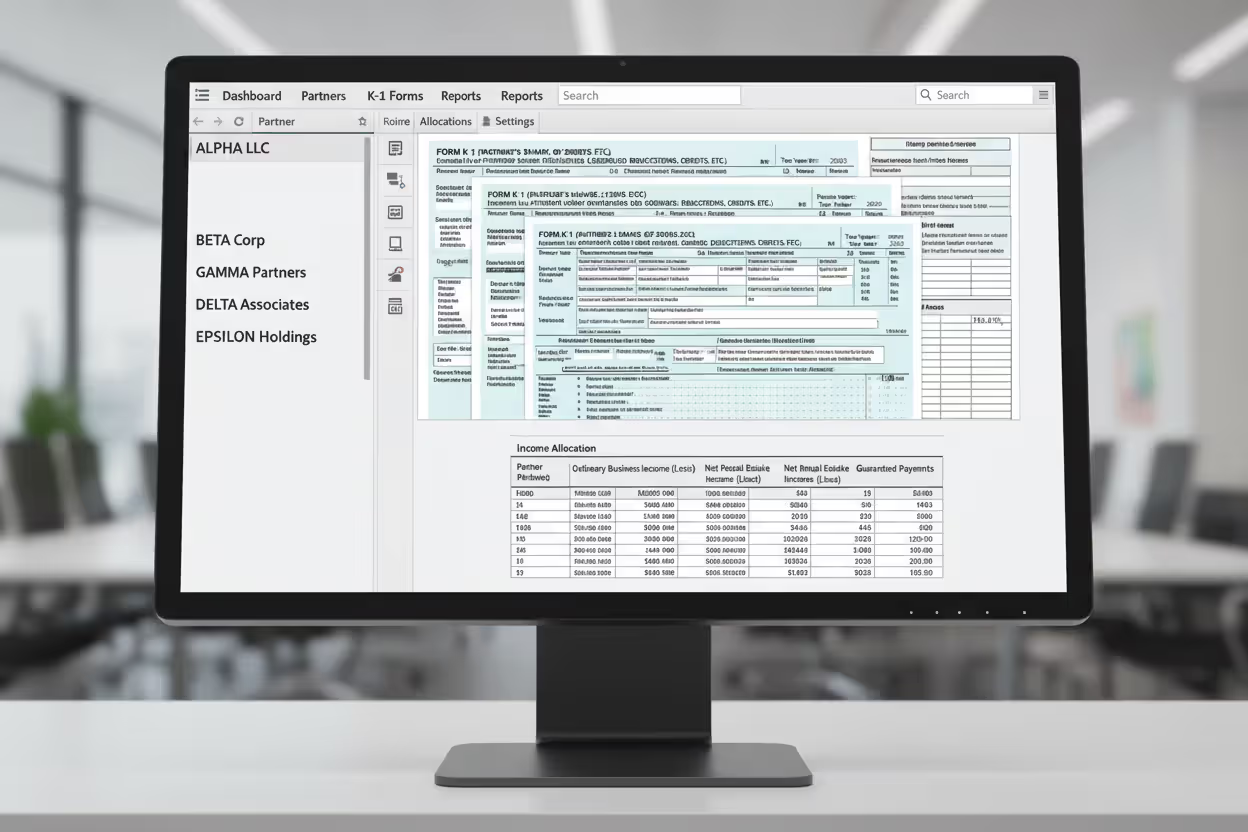
Schedule K-1 generation represents the software's most valuable function. The platform creates individualized K-1 forms showing each partner's share of ordinary business income, rental income, interest, dividends, capital gains, Section 179 deductions, charitable contributions, and dozens of other separately stated items. Partners need these forms to complete their personal or corporate tax returns, making accuracy essential.
Author: Olivia Pembroke;
Source: atiservicesoftampa.com
Form 1065 filing software transmits returns electronically to the IRS through the Modernized e-File system. Most platforms support direct transmission, though some smaller providers work through third-party intermediaries. Electronic filing accelerates processing, reduces rejection rates compared to paper filing, and provides confirmation of receipt. The software validates returns against IRS specifications before transmission, catching common errors like missing EINs, math discrepancies, or incomplete schedules.
State filing capabilities vary significantly among software providers. Comprehensive platforms prepare and e-file state partnership returns for all states where the partnership operates or has nexus. They handle state-specific requirements like California's annual franchise tax, New York's filing fees based on partner count, and states requiring composite returns or withholding on behalf of nonresident partners. Some partnerships face filing requirements in a dozen or more states, making integrated state filing a necessity rather than convenience.
Key Features to Look for in Partnership Tax Software
Selecting software for partnership tax returns requires evaluating features against your specific filing complexity and business needs. Not all platforms offer equivalent functionality, and gaps in critical areas create compliance risks or force workarounds.
Form 1065 and Schedule K-1 Support
Complete Form 1065 support means the software handles all schedules and attachments the IRS requires. Beyond the main form, partnerships commonly need Schedule B (other information questions), Schedule L (balance sheet), Schedule M-1 (reconciliation of income), and Schedule M-2 (partner capital accounts). Partnerships with international activities require additional forms like Schedule K-2 and K-3, which report items with international tax implications.
Schedule K-1 functionality should accommodate complex scenarios. Look for software that handles mid-year partner changes, varying ownership percentages throughout the year, and guaranteed payments. The platform should support multiple allocation methods and track each partner's basis automatically. For partnerships with corporate partners, S corporation shareholders, or trust beneficiaries, the software must generate K-1s appropriate for each entity type.
Multi-State Filing Capabilities
Partnerships conducting business across state lines face exponentially more complex filing obligations. Software must determine filing requirements based on nexus rules, which vary by state. Some states require returns based on physical presence, while others use economic nexus thresholds tied to revenue or transaction counts.
Composite return preparation saves partners from filing individual nonresident returns in every state where the partnership operates. The software should calculate composite tax at applicable state rates, prepare required forms, and handle payment processing. Additionally, look for platforms that manage withholding obligations—some states require partnerships to withhold tax on nonresident partners' shares of income, with penalties for noncompliance.
Partner Portal and Distribution Tools
Partner portals provide secure access where individual partners retrieve their K-1 forms, make estimated tax payments, and review their capital accounts. This self-service approach reduces administrative burden compared to emailing tax documents or mailing paper copies. Portals should offer multi-factor authentication, audit trails showing when partners accessed documents, and electronic signature capabilities for partnership agreements or consent forms.
Distribution tools help manage the flow of information to partners. Automated email notifications alert partners when K-1s are ready, with direct links to secure downloads. For partnerships with investor partners who need K-1s early for their own tax planning, the software should enable preliminary K-1 generation before finalizing the full partnership return.
Integration with Accounting Software
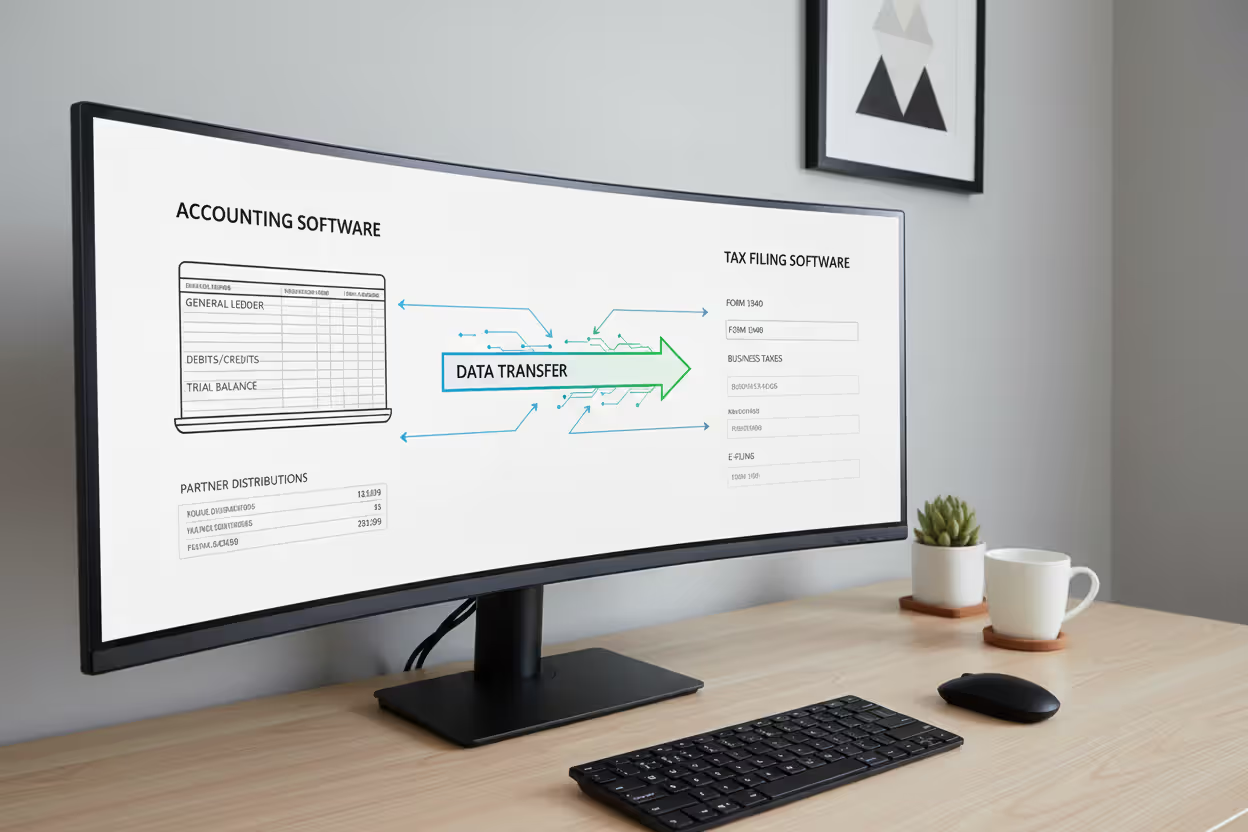
Direct integration with accounting platforms eliminates double entry and reduces transcription errors. The best partnership tax software connects with QuickBooks, Xero, Sage, or industry-specific accounting systems to import trial balances, detailed transaction registers, and partner distribution records.
Author: Olivia Pembroke;
Source: atiservicesoftampa.com
Integration depth matters. Basic connections might import only summary totals, requiring manual allocation among partners. Advanced integrations map account classifications to tax line items, track capital contributions and distributions by partner throughout the year, and maintain separate books for tax versus financial reporting. For partnerships using accrual accounting but filing taxes on cash basis, the software should handle basis adjustments automatically.
Common Mistakes When Choosing Partnership E-File Software
Selecting inappropriate partnership filing software creates problems that surface only during tax season—when switching platforms becomes impractical. Understanding common selection errors helps partnerships avoid costly mistakes.
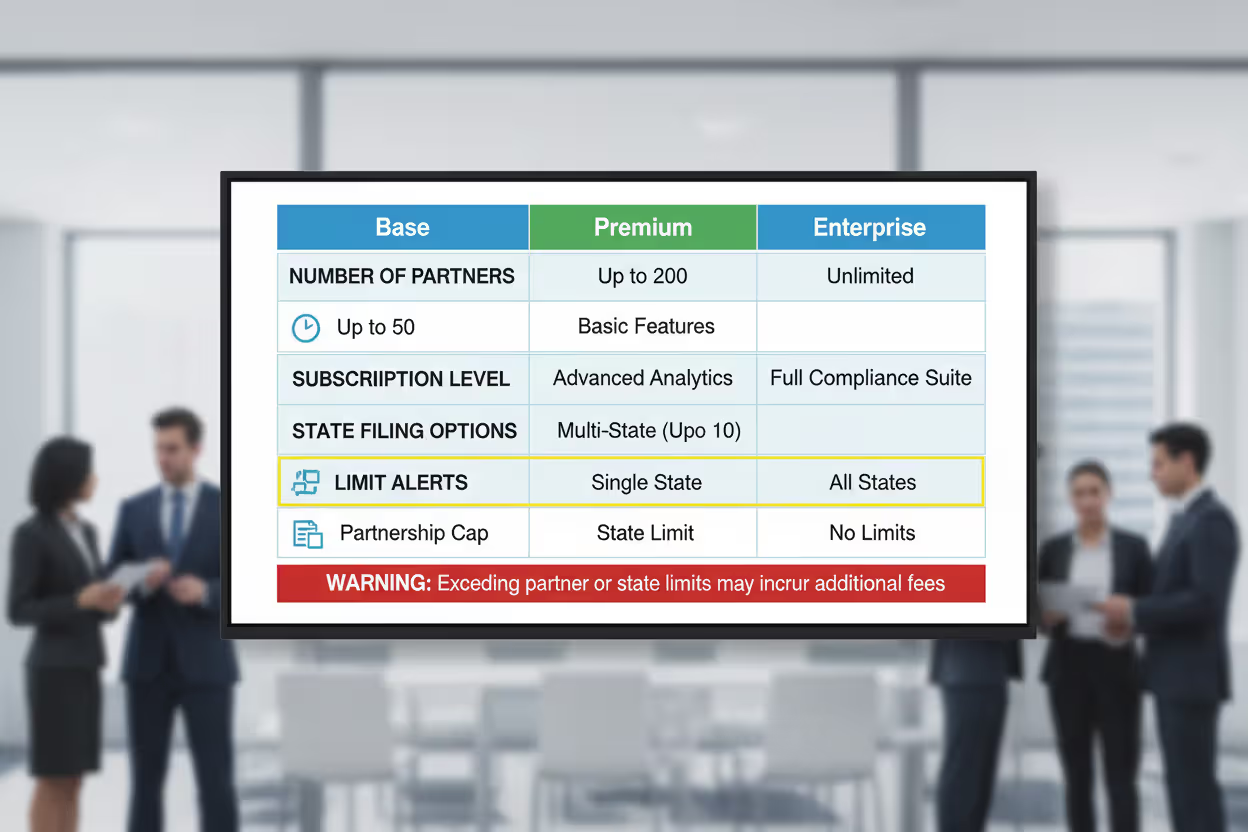
Many platforms impose partner count limits that aren't obvious during initial evaluation. A partnership with twelve members might purchase software rated for "small partnerships," only to discover the tier caps at ten partners. Exceeding partner limits typically requires expensive upgrades or forces manual workarounds that undermine the software's value. Always verify partner limits exceed your current count with room for growth.
Author: Olivia Pembroke;
Source: atiservicesoftampa.com
Overlooking state filing needs creates a fragmented workflow. Some partnerships purchase federal-only software, assuming they can handle state returns separately. This approach fails when state returns require data from the federal K-1s, or when timing mismatches create inconsistencies. A partnership operating in California, Oregon, and Nevada needs software that prepares all three state returns using consistent data from the federal filing.
Underestimating complexity requirements leads to functionality gaps. A partnership with straightforward operations might start with basic software, then add rental properties, foreign income, or complex special allocations. Mid-tier software often lacks forms for these situations, forcing partnerships to either file paper returns for specific schedules or upgrade to enterprise platforms at significant cost. Evaluate software against your three-year business plan, not just current needs.
Not checking IRS e-file authorization status can delay filing. The IRS maintains a list of approved e-file providers, and transmitting through unauthorized platforms results in rejection. Additionally, some software requires partnerships to obtain their own Electronic Filing Identification Number (EFIN) rather than using the provider's credentials—a process taking several weeks. Verify the software's e-file authorization and whether additional credentials are needed before tax season begins.
Partnership Tax Software Pricing Models
Partnership tax software pricing varies widely based on partner count, return complexity, and service level. Understanding pricing structures helps partnerships budget accurately and avoid surprise costs.
Per-return pricing charges a flat fee for each Form 1065 filed. This model suits partnerships filing only federal returns with few partners. Typical per-return costs range from $150 for simple partnerships with under five partners to $500+ for complex returns involving multiple states, foreign income, or special allocations. Each state return often incurs additional fees of $50-$150 per state.
Subscription models charge annual fees for unlimited filings during the subscription period. This approach benefits tax professionals serving multiple partnership clients or partnerships needing to amend returns frequently. Annual subscriptions range from $800 for basic platforms to $3,000+ for professional-grade software with advanced features. Subscriptions typically include software updates, customer support, and access to tax research resources.
| Partner Count Limit | State Returns Included | Price Range | Best For |
| 1-5 partners | 1 state | $150-$300 | Small local partnerships |
| 6-20 partners | Up to 3 states | $400-$800 | Growing regional partnerships |
| 21-100 partners | Up to 10 states | $1,200-$2,500 | Multi-state partnerships |
| Unlimited partners | Unlimited states | $3,000-$8,000+ | Large partnerships, tax professionals |
Several cost factors drive pricing beyond base rates. Partner count represents the primary variable—each additional partner increases K-1 preparation complexity. Partnerships with more than fifty partners often face custom pricing. State filing requirements significantly impact costs, since each state return requires separate preparation, validation, and transmission. Complexity factors like foreign operations, multiple business activities, or tiered partnership structures push returns into higher pricing tiers.
Hidden fees warrant careful scrutiny. Some providers charge separately for e-filing, even though electronic transmission represents a core function. Customer support fees, ranging from $200-$500 annually, may not be included in base pricing. Amendment fees for corrected returns can reach $100-$200 per amended return. Bank product fees apply if partners want refunds via direct deposit or debit cards. Review the complete fee schedule before committing to a platform.
When to Use Software vs. Hiring a Tax Professional
The decision between self-service partnership tax return software and professional tax preparation depends on return complexity, internal expertise, and cost considerations. Many partnerships benefit from hybrid approaches that combine both resources.
Software makes sense for partnerships with straightforward operations: single-state presence, equal ownership percentages matching profit allocations, no special allocations, and income from one business activity. If the partnership has fewer than ten partners, maintains clean accounting records, and someone internally understands partnership taxation basics, software provides a cost-effective solution. Annual software costs of $300-$800 compare favorably to professional preparation fees of $1,500-$3,000 for similar returns.
Tax professionals become necessary when complexity exceeds software capabilities or internal expertise. Partnerships with guaranteed payments, varying ownership percentages throughout the year, or special allocations deviating from ownership interests need professional guidance to ensure proper reporting. International operations, passive activity loss limitations, or at-risk basis calculations introduce technical requirements where errors trigger audits or penalties.
Accurate Schedule K-1 preparation represents the most critical function of partnership tax software. Errors in K-1s cascade to every partner's individual return, potentially triggering multiple audits from a single mistake. Partnerships should invest in robust software or professional preparation—the cost of getting K-1s wrong far exceeds the price of getting them right
— Michael Thornton
Cost-benefit analysis shifts as partnerships grow. A three-partner local business might spend $400 on software versus $1,800 for professional preparation—a clear savings. But a twenty-partner multi-state partnership faces $2,000 in software costs (including state returns and support) compared to $4,000 for professional preparation. The narrower gap makes professional expertise more attractive, especially considering the time investment required to master the software.
Hybrid approaches offer middle-ground solutions. Many partnerships use software for data entry and initial preparation, then hire CPAs for review and final filing. This model reduces professional fees by 30-50% while maintaining expert oversight. Another approach involves professionals preparing the initial year's return, then providing templates and guidance for internal teams to handle subsequent years using software. Partnerships switch back to professional preparation when significant changes occur—adding partners, entering new states, or restructuring operations.
Frequently Asked Questions About Partnership Tax Software
Partnership tax return software transforms a complex, multi-document filing process into a manageable workflow. For partnerships ranging from small LLCs to large multi-state operations, the right software ensures accurate Form 1065 preparation, compliant Schedule K-1 generation, and timely electronic filing. The key lies in matching software capabilities to your partnership's specific needs—partner count, state filing requirements, and operational complexity.
Evaluate platforms based on comprehensive Form 1065 support, robust K-1 generation, multi-state capabilities, and integration with your existing accounting systems. Avoid common mistakes like choosing software with inadequate partner limits or insufficient state coverage. Consider whether your partnership's complexity warrants self-service software, professional preparation, or a hybrid approach combining both.
Pricing varies significantly across providers and tiers, but the investment in appropriate software pays dividends through reduced errors, time savings, and compliance confidence. As partnership taxation grows more complex with evolving state nexus rules and international reporting requirements, specialized software becomes increasingly essential for accurate, efficient filing.
Related Stories

Read more

Read more




The content on this website is provided for general informational and educational purposes only. It is intended to explain concepts related to tax filing, tax software, IRS forms, deadlines, and general tax preparation processes.
All information on this website, including articles, guides, and examples, is presented for general educational purposes. Tax filing requirements may vary depending on individual circumstances, income sources, residency status, and applicable laws.
This website does not provide tax, legal, or financial advice, and the information presented should not be used as a substitute for consultation with a qualified tax professional or advisor.
The website and its authors are not responsible for any errors or omissions, or for any outcomes resulting from decisions made based on the information provided on this website.